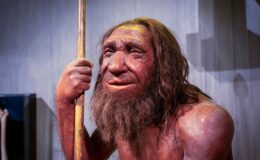
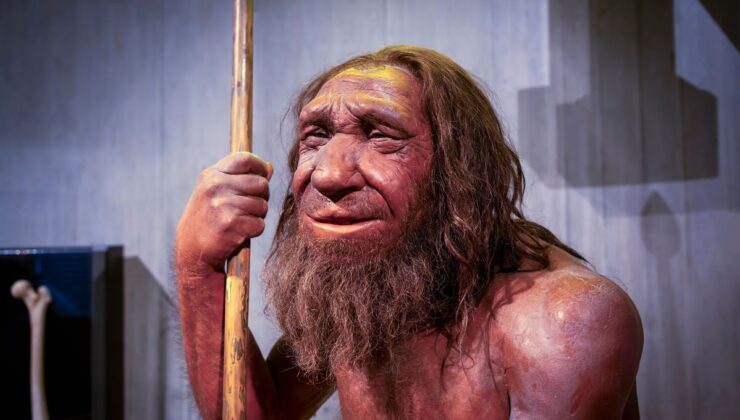
Neandertaller, 1856’daki keşiflerinden sonraki yüzyılda bir halkla ilişkiler felaketi yaşadı. Oldukça yakın zamana kadar, popüler tahayyülde onlar, kalın kaşlı, kıllı “mağara adamları” olarak görülüyordu. Pek çok kişi bu talihsiz klişeyi tek bir adama, Marcellin Boule’ye ve onun “La Chapelle’in Yaşlı Adamı” olarak bilinen tek bir Neandertal iskeletini yanlış yorumlamasına bağlıyor. Ancak hikaye bundan biraz daha karmaşıktır.
1908’de Boule bir girişimde bulundu. uzun çalışma Fransa’nın merkezinde bir mağarada yakın zamanda keşfedilen “La Chapelle-aux-Saints 1” adlı bir hominin iskeleti. Bir Neandertal iskeletinin tamamının ilk ayrıntılı analizi olan makale, gelişen antropoloji dünyasında büyük bir sıçrama yaptı; Bilge bir adam bu gezegende yürüyen ilk ve tek insan türü değildi.
However, Boule was not exactly impressed by the new species, nor struck by its similarities with our own. Far from any sense of awe, his characterization of the prehistoric skeleton attempted to put a gulf of distance between the Neanderthal and modern humanity. He suggested the Neanderthal was “uncouth” and “repellent,” possessing a primitive and “heavy body” that was echoed in its “rudimentary and most miserable” technology.
“The Neanderthal Man must have possessed only a rudimentary psychic nature, superior certainly to that of the apes, but markedly inferior to that of any modern race whatever,” Boule wrote in his 1923 book Fossil Men: Elements of Human Palaeontology.
“Even the primitives at the peripheries of the Earth are considerably more advanced than this brute, which is closer to the apes than any human race,” he added in his 1908 study.
We now know that this interpretation is highly inaccurate (if not a little rude). When researchers analyzed La Chapelle-aux-Saints 1 in 1956, they found that its hunched posture was almost certainly the result of severe osteoarthritis, not some innate “ape-like” stature. His missing teeth, they concluded, were not a sign of primitive neglect but rather evidence that other individuals had cared for him during diminishing health, keeping him alive through altruism and compassion.
Although the prehistoric skeleton was in remarkably good condition, Chapelle-aux-Saints 1 proved to be a deeply unrepresentative member of the species; it would be like making an elderly, disabled man the archetypal image for all Homo sapiens.
The misinterpretation is sometimes called “Boule’s error“. His extensive writing, accompanied with some unflattering illustrations, had long been blamed for the negative stereotype of Neanderthals that persisted throughout the 20th century and continues to linger today.
However, this bad reputation might not have been purely Boule’s fault. Revisionists have once again looked through the historical narratives of the 19th century and found that the “brutish” reputation of Neanderthals started way before the La Chapelle-aux-Saints 1 left his cave.
“Boule interpreted the elderly, arthritic skeleton as an idiotic hunched-over brute—conflating pathological deformity with species-wide idiocy. This mistake, scholars have argued, resulted in a ‘merciless characterization’ of the species that ‘almost single-handedly’ revolutionized the ways scientists think about Neanderthals,” Paige Madison, a science writer and historian of palaeoanthropology, wrote in a 2020 paper published in the Journal of the History of Biology.
Madison goes on to argue that the Neanderthal’s reputation of being an “uncouth and repellent creature” actually started in the 19th century, decades before Boule’s work hit the press. While he did reinforce the myth, he can’t be held solely responsible for its spread.
19. yüzyıl ve 20. yüzyılın başları, ortaya çıkan ırk teorilerinin ilerlemenin durdurulamaz gücüne inanan bir dünya görüşüyle iç içe geçtiği bir dönemdi. İnsanların sahip olması gerektiğini düşündüler aptal maymunlar olarak başladısonunda Tanrı’nın şaheserine dönüşmeden önce biraz daha az aptal maymunlara dönüştü: Bilge bir adam (Latince “düşünen adam” anlamına gelir).
Ancak bu doğrusal, ilerici evrim imajı, gerçeğin oldukça düzleştirilmiş bir görüşüdür. Gerçekte bu, organizmaların etraflarındaki dünyaya uyum sağlamalarının gösterişsiz, acı verici derecede uzun bir sürecidir. Merdiven yok, bitiş çizgisi yok ve hiyerarşi yok.
Daha da fazla araştırma çalışması bu fikri doğruladı ve Neandertal imajının yeniden canlanmasına yardımcı oldu. 21. yüzyılda artık karmaşık aletler yaptıklarını ve bunları yapmayı sevdiklerini biliyoruz. mağaralarını süslüyor sanat eserleriyle. Birçok araştırmacı buna inanıyor ölülerini niyetle gömdüler en azından bizim gözümüze acı ve ölümlülük anlayışı gibi görünen bir şey. Belki bazı Neandertal topluluklarının dine veya maneviyata benzer bir şey.
Dolayısıyla bir dahaki sefere birisinin “Neandertal” kelimesini hakaret olarak kullandığını duyduğunuzda, bunun aslında onların düşündüğü gibi küçümseme olmadığını unutmayın.


 News
News